

Sales teams have always used scenarios to practice, from manager-led roleplays to scripted call shadowing. What has changed is the ability to generate, personalize, and evaluate practice conversations at scale.
An AI scenario is a structured, interactive simulation where an AI plays the role of a buyer (or customer) and adapts in real time to how the rep responds. Instead of memorizing a script, the rep practices the actual skill: discovering needs, handling objections, controlling the conversation, and progressing the deal.
What is an AI scenario (in plain English)?
An AI scenario is a realistic “practice situation” powered by AI that:
- Sets a context (industry, product, deal stage, persona, constraints).
- Gives the learner a goal (for example, book a next meeting, qualify budget, save a renewal).
- Responds dynamically (the AI buyer pushes back, asks questions, changes tone).
- Produces coaching signals (feedback on what happened and what to improve).
In sales coaching, that matters because performance depends on behavior under pressure, not just knowledge. Great reps do a lot of micro-decisions in a call: when to probe, when to summarize, when to push, when to slow down. AI scenarios are built to train those moments deliberately and repeatedly.
This approach aligns with how expertise is built through repeated practice and targeted feedback (often described as “deliberate practice”). If you want a deeper research-based view of what makes practice effective, see the overview of deliberate practice in educational psychology literature (for example, via the American Psychological Association).
How an AI scenario differs from a script or a traditional roleplay
Traditional sales roleplays can be effective, but they have two common bottlenecks: time and consistency. Not every rep gets enough repetitions, and not every manager scores the same behaviors the same way.
Here is a practical comparison:
| Coaching method | What you gain | Common limitation |
|---|---|---|
| Script reading | Message consistency | Low realism, weak objection handling |
| Peer roleplay | Some realism, low cost | Inconsistent buyer behavior, awkward dynamics |
| Manager roleplay | Higher realism, targeted feedback | Hard to scale, time intensive |
| AI scenarios | High repetition, consistent scoring, personalized difficulty | Needs good scenario design and quality feedback loops |
AI scenarios are not “set it and forget it.” The value comes from designing the scenario well, then using performance data to focus coaching time where it matters.
The building blocks of a good AI sales scenario
If you want AI practice to translate into pipeline outcomes, the scenario needs more than a persona name and a generic prompt. Strong scenarios usually include these elements:
| Scenario element | What it controls | Example |
|---|---|---|
| Role and persona | Buyer behavior, tone, priorities | “VP of Finance, skeptical, detail-oriented, hates fluff” |
| Deal stage | What “success” looks like | Discovery vs renewal vs pricing negotiation |
| Constraints | Real-world friction | “No budget approved yet, competing vendor is entrenched” |
| Skill focus | The coaching target | Objection handling, discovery depth, talk-to-listen ratio |
| Rubric | How performance is measured | Clarity of next steps, quality of questions, handling risk |
| Adaptive difficulty | How it pushes the learner | Easy objections first, then layered objections |
When these are clear, the AI can simulate the right kind of resistance and your feedback can be tied to behaviors you actually want on calls.

Examples of AI scenarios for sales coaching (ready to copy and adapt)
Below are practical scenario templates you can use to coach specific skills. They are written to be adaptable across industries.
1) Discovery call with a time-crunched buyer
When to use it: New inbound lead, first meeting, low attention span.
Scenario setup: The buyer has 12 minutes. They are curious but skeptical, and they will end the call if it feels like a pitch.
Rep goal: Earn a second meeting by identifying one high-impact pain and confirming value outcomes.
What the AI should do: Interrupt, redirect to priorities, challenge vague claims.
Coaching focus: Question quality, summarization, clarity of next step.
2) “Send me pricing” early objection
When to use it: Buyer tries to shortcut discovery.
Scenario setup: Buyer wants a price range before giving details, and they compare you to a cheaper competitor.
Rep goal: Reframe pricing as value-based, earn permission to ask 3 to 5 questions, avoid defensive posture.
What the AI should do: Push for a number, cite competitor pricing, imply you are expensive.
Coaching focus: Calm tone, control of sequence, value framing, qualification.
3) Competitive displacement (incumbent is “good enough”)
When to use it: Your prospect already uses a competitor and feels switching is risky.
Scenario setup: Buyer likes the incumbent, complains only mildly, and fears change management.
Rep goal: Surface switching triggers (risk, cost, timeline), introduce differentiation, create a business case for change.
What the AI should do: Minimize pain, overstate switching costs, ask for proof.
Coaching focus: Insight-led questions, quantifying impact, de-risking language.
4) Multi-threading and stakeholder mapping
When to use it: Complex deals where your champion is not the decision-maker.
Scenario setup: You are speaking with a mid-level manager who likes you but cannot approve budget.
Rep goal: Identify decision process, map stakeholders, request introductions without damaging trust.
What the AI should do: Avoid naming decision-makers, say “procurement handles that,” worry about politics.
Coaching focus: Diplomatic ask, mutual action plan language, stakeholder clarity.
5) Negotiation with procurement (discount pressure)
When to use it: Late stage deals with margin risk.
Scenario setup: Procurement demands an immediate discount and threatens to delay signature.
Rep goal: Protect price integrity, trade concessions for commitment, anchor on outcomes and terms.
What the AI should do: Create urgency, bring up alternative vendors, reference budget cuts.
Coaching focus: Negotiation posture, conditional concessions, terms-based negotiation.
6) Renewal save (customer is unhappy)
When to use it: Expansion and retention teams, CSMs, sales owners.
Scenario setup: Customer is frustrated about adoption or support responsiveness and wants to reduce scope.
Rep goal: De-escalate, uncover root cause, propose a recovery plan, secure a renewal path.
What the AI should do: Use emotional language, cite missed expectations, threaten churn.
Coaching focus: Empathy, accountability language, recovery plan, next-step alignment.
7) Upsell and cross-sell without sounding pushy
When to use it: Existing accounts with usage data signals.
Scenario setup: Customer is satisfied but does not think they need more.
Rep goal: Tie expansion to a measurable outcome, confirm constraints, position add-ons as enablement.
What the AI should do: Question ROI, ask “why now?”, worry about change fatigue.
Coaching focus: Outcome framing, timing rationale, permission-based selling.
8) Handling “We’re just researching” (low intent)
When to use it: Early stage prospects who are information gathering.
Scenario setup: Buyer is polite, vague, and refuses to define timeline.
Rep goal: Qualify intent and urgency without being aggressive, provide value, decide whether to advance or disqualify.
What the AI should do: Avoid details, ask for generic info, resist next step.
Coaching focus: Qualification discipline, respectful assertiveness, exit criteria.
A quick library: AI scenario examples by skill and difficulty
If you are building a training plan, it helps to map scenarios to skills and levels. Here is a simple starter set:
| Scenario | Primary skill | Difficulty | “Win condition” |
|---|---|---|---|
| Time-crunched discovery | Discovery control | Beginner | Second meeting booked with clear agenda |
| Send pricing early | Objection handling | Beginner to intermediate | Buyer agrees to discovery before pricing |
| Incumbent competitor | Differentiation | Intermediate | Buyer acknowledges a reason to consider change |
| Stakeholder mapping | Deal process | Intermediate | Introductions requested and next steps agreed |
| Procurement discount | Negotiation | Advanced | Concessions traded for term or commitment |
| Renewal save | De-escalation | Advanced | Recovery plan accepted and renewal path defined |
How to coach with AI scenarios (so it changes live-call behavior)
AI roleplays become sales coaching when you connect practice to real performance and reinforce the right behaviors.
Step 1: Start with one call type, not “all of sales”
Pick a high-impact moment that is common and measurable (for example, discovery calls or pricing objections). This increases repetition and makes it easier to see improvement.
Step 2: Define what “good” looks like with a rubric
A rubric prevents feedback from becoming subjective. You might score:
- Quality of discovery questions (specific, outcome-focused)
- Talk-to-listen balance (and interruption control)
- Objection handling sequence (acknowledge, explore, reframe, confirm)
- Next-step clarity (date, stakeholders, purpose)
Step 3: Use progressive difficulty
Early reps should face one objection at a time. More experienced reps should face layered resistance (for example, pricing pressure plus security concerns plus a competitor reference).
Step 4: Coach patterns, not individual “gotchas”
The real win is identifying repeatable behaviors across the team. For example, a pattern like “reps jump to pitching after one pain point” is coachable with targeted scenarios.
Step 5: Connect training data to business outcomes carefully
It is tempting to promise direct causation, but keep it honest: training metrics are leading indicators. Helpful leading indicators include improved call confidence, more consistent next steps, and stronger objection handling, which can support better conversion rates over time.
If you want an external benchmark for where AI is being used in sales, McKinsey’s reporting on AI in commercial functions is a useful reference point (see McKinsey’s AI in sales overview).
Common pitfalls when designing AI sales scenarios
Even strong teams can get poor results if scenarios are designed incorrectly.
Pitfall: Scenarios are too generic. If every buyer sounds the same, reps will not learn how to adapt. Add industry context, constraints, and persona motivations.
Pitfall: Feedback is only “tips,” not specific behaviors. Coaching needs to reference what the rep actually said and what outcome it caused.
Pitfall: You train scripts instead of decisions. The goal is not perfect wording, it is choosing the right move under pressure.
Pitfall: No alignment with your sales methodology. If your team uses a framework (MEDDICC, SPICED, Challenger, etc.), make scenario scoring match that language.
Where Scenario IQ fits (and how to evaluate any platform)
If you are evaluating an AI scenario platform for sales coaching, look for capabilities that support repeatable practice and measurable improvement:
- AI-powered roleplay simulations that feel realistic across buyer personalities
- Personalised training scenarios (by role, skill level, product line, or industry)
- Real-time feedback that highlights behaviors, not just generic advice
- Progress tracking analytics that help managers coach patterns across a team
- Enterprise-grade security for organizational adoption and governance
Scenario IQ is built around AI-driven, personalized scenario-based training with adaptive simulations, real-time feedback, and actionable analytics. The practical way to start is to pick one sales moment (for example, discovery) and build a short scenario track that your team can repeat weekly, then use the analytics to target live coaching where it will have the biggest impact.
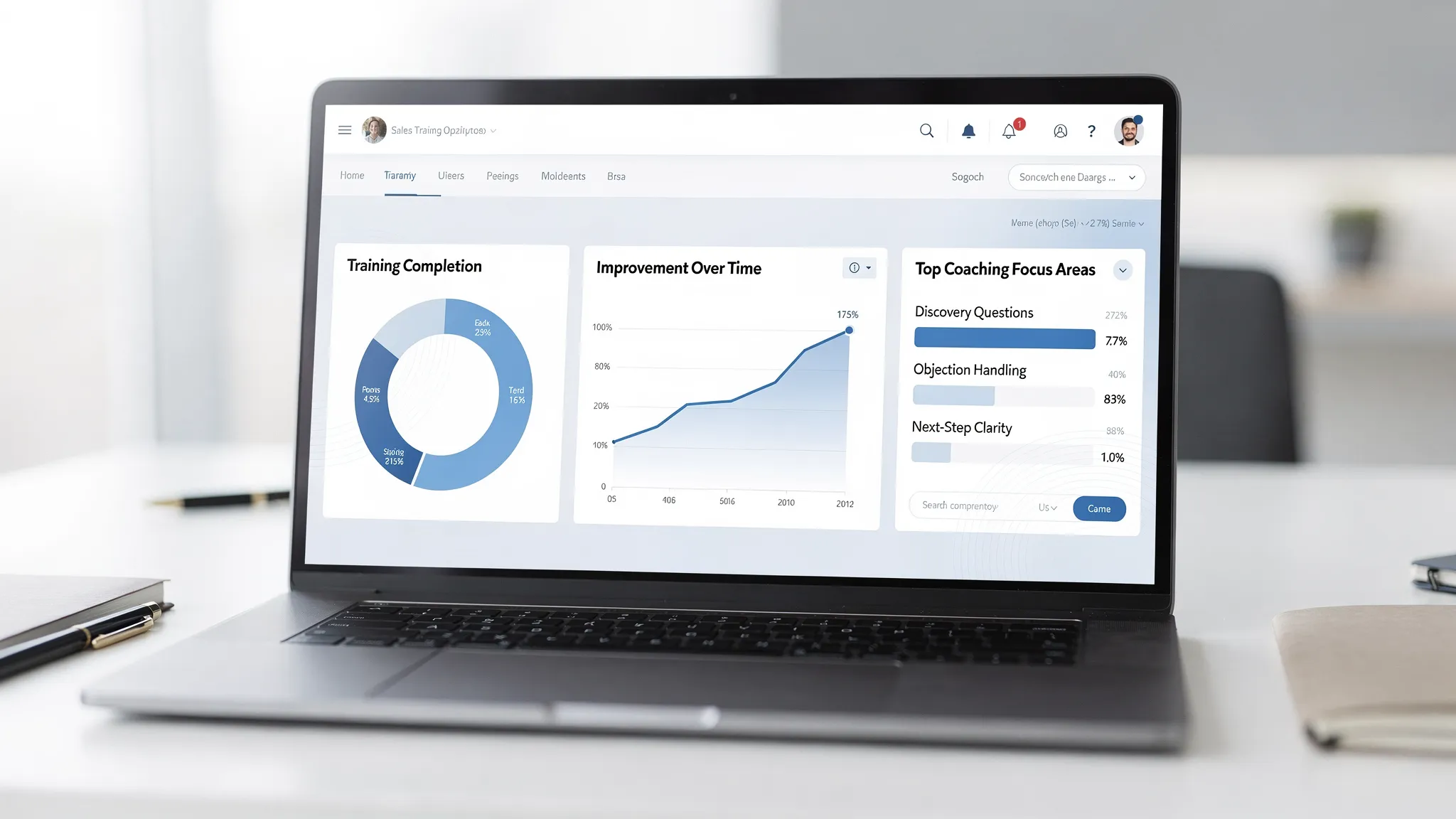
The takeaway: an AI scenario is a practice environment for real sales conversations
An AI scenario is not just a chatbot conversation. In sales coaching, it is a structured simulation designed to train specific skills (discovery, objections, negotiation, renewal saves) with repetition and feedback.
If your team already knows what to do but struggles to do it consistently under pressure, scenario-based AI roleplay can close the gap by giving reps more at-bats and giving managers clearer coaching signals.
To explore what this can look like in your organization, you can learn more about Scenario IQ’s approach to AI roleplay training at Scenario IQ.