
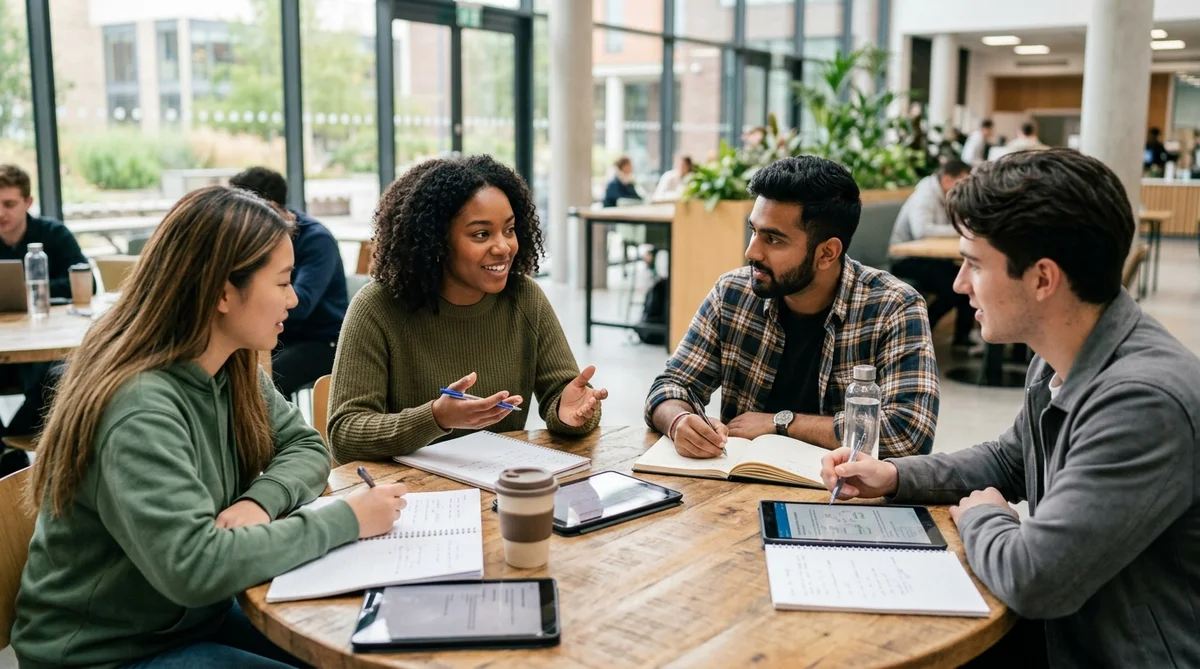
Soft skills training for college students focuses on developing non-technical abilities like emotional intelligence, communication, and adaptability. Research indicates that 85% of job success comes from well-developed soft skills. Effective training involves experiential learning, such as AI roleplay for universities, allowing students to practice high-stakes interactions in low-risk, simulated environments.
Why is soft skills training for college students essential for career readiness?
The transition from the lecture hall to the corporate office is often more jarring than students anticipate. While academic excellence provides the foundational knowledge required for a role, it is the interpersonal and cognitive flexibility—collectively known as soft skills—that determines a graduate's long-term trajectory. In the modern labor market, technical proficiency is a baseline requirement, but the ability to navigate complex organizational dynamics is the true differentiator.
Employers frequently report a "skills gap" among recent graduates. This gap is not typically found in their ability to code, calculate, or analyze data, but rather in their ability to collaborate, resolve conflicts, and communicate with clarity. Soft skills training for college students bridges this divide by providing the behavioral tools necessary to succeed in diverse work environments. Without these skills, even the most brilliant students may struggle with team integration, client management, or leadership transitions.
Furthermore, the rise of automation and generative AI has shifted the value proposition of human workers. As machines take over routine analytical tasks, the demand for uniquely human traits—empathy, ethical judgment, and creative problem-solving—has skyrocketed. For students, mastering these skills is no longer an elective pursuit; it is a fundamental requirement for remaining relevant in a shifting economy.
The Core Soft Skills Every Student Must Master
To build a robust professional identity, students must focus on a specific set of competencies that are universally valued across industries. These are not innate talents but are behaviors that can be refined through deliberate practice and feedback. Key areas include:
- Effective Communication: This encompasses verbal clarity, professional writing, and, perhaps most importantly, active listening. Students must learn to tailor their message to different audiences, from executive leadership to technical peers.
- Critical Thinking and Problem-Solving: Moving beyond rote memorization to analyze complex situations and propose viable solutions.
- Emotional Intelligence (EQ): The capacity to recognize and manage one's own emotions while navigating the emotions of others. This is critical for mastering effective communication training for high-performance teams.
- Adaptability and Resilience: The ability to pivot when faced with unexpected challenges and to view setbacks as learning opportunities.
- Collaboration and Teamwork: Working effectively within a group, managing diverse perspectives, and contributing to a shared goal.
| Skill Category | Academic Application | Workplace Application |
|---|---|---|
| Communication | Presenting a thesis or paper | Pitching to clients or stakeholders |
| Problem-Solving | Solving a complex math equation | Resolving a supply chain bottleneck |
| Teamwork | Completing a group project | Cross-departmental project management |
| Adaptability | Adjusting to a new semester schedule | Responding to a sudden market shift |
How can universities implement effective soft skills programs?
Integrating soft skills into the higher education experience requires a multi-faceted approach. It is not enough to offer a single workshop or a guest lecture; these skills must be woven into the fabric of the academic journey. One of the most effective strategies is the use of "embedded curriculum" models, where soft skill development is a graded component of technical courses. For example, an engineering course might grade students not just on the functionality of their prototype, but on the quality of their team collaboration and their ability to explain their design to non-engineers.
Career services departments also play a pivotal role. By moving beyond resume reviews and into behavioral coaching, these departments can help students prepare for the nuances of professional life. This often involves mastering case interview practice, which forces students to demonstrate their logic and communication under pressure. When universities provide these structured environments for practice, students develop the "muscle memory" required for real-world high-stakes interactions.
Lastly, partnerships with industry leaders can provide students with mentorship and internship opportunities that serve as a laboratory for soft skill development. Real-world exposure allows students to observe high-performing professionals in action, providing a blueprint for their own behavioral growth.
Leveraging AI Roleplay for Universities and Simulated Learning
One of the greatest challenges in soft skills training has historically been scalability. It is difficult to provide personalized, one-on-one coaching to thousands of students simultaneously. However, the emergence of the AI roleplay training platform has revolutionized this space. Platforms like Scenario IQ allow universities to deploy realistic, scenario-based simulations where students can practice difficult conversations with AI-driven personas.
These simulations provide a safe, low-stakes environment for students to fail and learn. For instance, a student might engage in a simulation where they must deliver constructive feedback to a difficult teammate. The AI provides real-time feedback on their tone, word choice, and empathy levels. This type of adaptive guidance ensures that the training is personalized to each student's current skill level. In specialized fields, such as medicine, virtual patient simulation allows students to practice bedside manner and diagnostic communication before they ever step into a clinical setting, significantly improving patient outcomes and student confidence.
What are the most effective methods for teaching soft skills?
Traditional lectures are notoriously ineffective for teaching behavioral skills. You cannot learn empathy from a PowerPoint presentation any more than you can learn to swim by reading a book. Instead, educators must prioritize experiential learning models. These models focus on the cycle of experience, reflection, and application.
Role-playing remains the gold standard for soft skills development. By stepping into a specific persona and navigating a conflict, students are forced to think on their feet. When these role-plays are enhanced by technology, such as the platforms provided by Scenario IQ, they become even more powerful because they can be repeated indefinitely until a student reaches a level of mastery. Peer-to-peer feedback is another critical component, as it encourages students to view their own behavior through the eyes of others, fostering a deeper sense of self-awareness.
| Method | Pros | Cons |
|---|---|---|
| AI Simulations | High scalability, personalized, safe environment | Requires initial technology investment |
| In-Person Workshops | High social engagement, physical cues | Difficult to scale, high cost per student |
| Peer Coaching | Builds empathy and listening skills | Quality of feedback can be inconsistent |
| Internships | Real-world context, high stakes | Limited availability, variable experience |
The Role of Emotional Intelligence in Post-Graduate Success
Emotional intelligence (EQ) is often cited as the single most important predictor of professional success. For college students, developing EQ means moving beyond academic intelligence to understand the social fabric of the workplace. This includes self-regulation—the ability to stay calm under pressure—and social awareness—the ability to read the room and understand the unspoken needs of colleagues.
Universities that prioritize EQ training see their graduates move into leadership positions more quickly. This is because leaders are not just people who are good at their jobs; they are people who can motivate others, navigate office politics ethically, and build a culture of trust. By incorporating EQ assessments and reflective journaling into the curriculum, institutions can help students identify their emotional triggers and develop strategies for more effective interpersonal engagement.
Can soft skills be objectively measured in an academic setting?
A common criticism of soft skills training is that it is "too subjective" to measure. However, by using established frameworks like the Kirkpatrick Model, institutions can track the effectiveness of their programs across four levels: reaction, learning, behavior, and results. At the behavioral level, technologies like Scenario IQ provide data-driven dashboards that track metrics such as sentiment analysis, response time, and the use of key phrases, offering a quantitative look at qualitative progress.
By setting clear rubrics for communication and teamwork, educators can provide students with specific, actionable data. For example, instead of telling a student they need to "communicate better," a rubric might show that they are struggling specifically with "conciseness in executive summaries" or "active listening during team disputes." This granularity turns soft skills from vague concepts into manageable, improvable tasks.
Building a Future-Proof Skillset for the 2025 Job Market
As we look toward the middle of the decade, the integration of soft skills and technology will be the hallmark of a successful career. Students must be prepared for a world where remote work, cross-cultural collaboration, and AI-assisted decision-making are the norm. This requires building a future-proof learning and development strategy for 2025 and beyond that emphasizes continuous learning and behavioral agility.
College students who graduate with a high degree of soft skill proficiency will find themselves not just employable, but indispensable. They will be the ones who can bridge the gap between technical teams and business leadership, the ones who can maintain morale during organizational changes, and the ones who can lead with empathy in an increasingly digital world. The investment in soft skills training today is the most significant contribution a university can make to a student's lifelong success.
FAQ
Question: What are the most important soft skills for college graduates? The most critical skills include effective communication, emotional intelligence, adaptability, and critical thinking. These allow graduates to navigate the ambiguity of the modern workplace and collaborate effectively with diverse teams.
Question: How does AI improve soft skills training for students? AI provides a scalable, safe environment for students to practice role-playing scenarios with instant, data-driven feedback. This allows for personalized learning paths and the ability to practice high-stakes conversations without real-world consequences.
Question: Can soft skills really be taught, or are they innate? While some people may have a natural inclination toward certain traits, soft skills are behaviors that can be learned, practiced, and mastered through deliberate training and feedback loops.
Question: Why do employers value soft skills more than technical skills? Technical skills can often be taught on the job or through short-term training, but soft skills are deeply ingrained behaviors that impact culture, retention, and long-term leadership potential.
Question: How can students practice soft skills daily? Students can practice by seeking out leadership roles in clubs, participating in peer-to-peer coaching, and using AI-driven simulation platforms to refine their communication and conflict-resolution abilities.
Ready to empower your students with the communication and leadership skills they need to thrive? Scenario IQ provides the advanced AI roleplay tools necessary to turn academic knowledge into professional mastery. Discover how our scenario-based simulations can transform your university's career readiness programs today.