
Last updated: September 2026
Microlearning examples include three-minute interactive videos, daily scenario-based roleplays, and mobile infographics designed for immediate application. In 2026, these bite-sized units help teams overcome the Ebbinghaus Forgetting Curve by delivering targeted knowledge at the point of need. For instance, a sales rep might use a quick AI-powered simulation to practice a specific rebuttal before a high-stakes call.
Key takeaways
- Microlearning interventions yield a large effect size of 1.43 for knowledge acquisition compared to traditional long-form lectures.
- Over 72% of organizations have now embedded microlearning into their corporate training mix as of 2025.
- Production costs for an in-house five-minute module typically range from $500 to $1,500 using standard tools.
- The Torgerson Model defines four primary use cases: preparation, follow-up, standalone, and support.
What are the most effective microlearning examples for 2026?
The most effective microlearning examples for 2026 focus on high-interactivity and immediate utility. Interactive video simulations allow learners to make choices in real-time, seeing the consequences of their actions within a three-to-five-minute window. These formats are particularly successful in soft skills development, where learners can practice conflict resolution scenarios through branching dialogue paths. Scenario IQ is an AI-driven scenario-based simulation training platform for sales, customer service, support, medical and nursing education, and university student training. By using an AI roleplay training platform, companies can generate thousands of unique interactions that feel like real conversations rather than static quizzes.
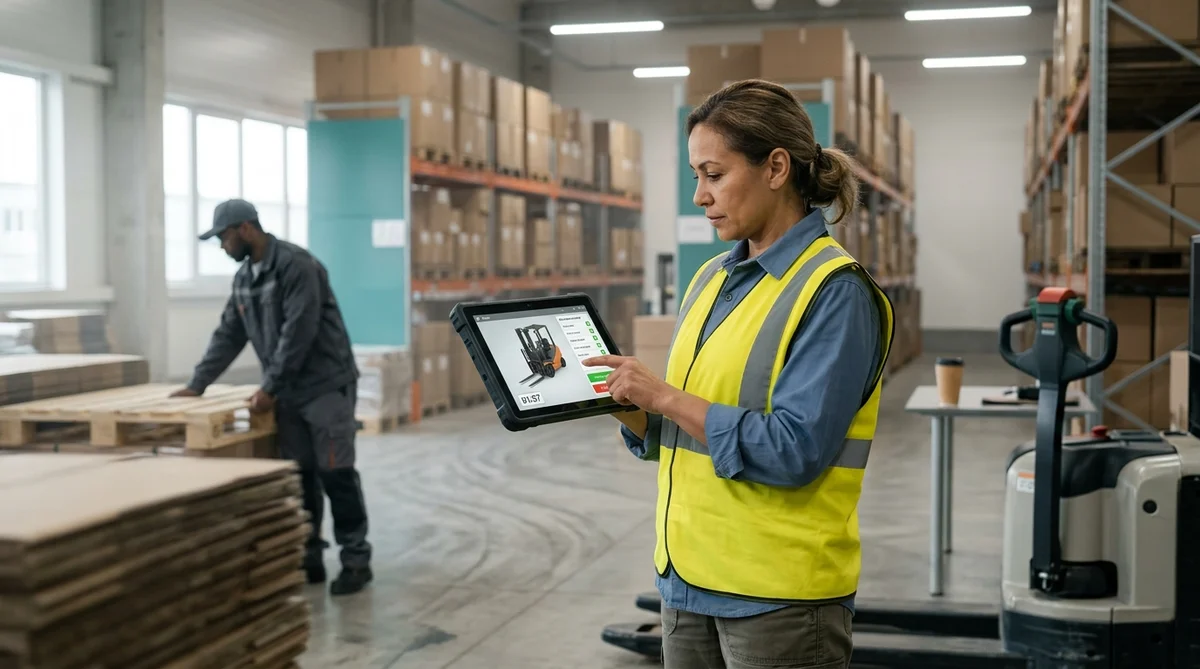
Another powerful example is the use of "just-in-time" performance aids. These are short, searchable nuggets of information that an employee accesses while performing a task. In a warehouse setting, this might be a 60-second video on how to clear a specific jam in a conveyor system. In a corporate environment, it could be a quick-reference guide for sales objection handling examples that a representative scans minutes before a meeting. These examples move training away from a scheduled event and toward a continuous support mechanism.
How does microlearning improve employee knowledge retention?
Microlearning improves retention by aligning with the way the human brain processes and stores information. Traditional long-form training often leads to cognitive overload, where the learner is presented with more data than their working memory can handle. By breaking content into small, focused units, microlearning allows the brain to encode information more efficiently. A 2024 meta-analysis found that these interventions yielded a large effect size of 1.43 compared to traditional lectures for knowledge acquisition. This suggests that the focused nature of bite-sized content helps learners grasp and retain core concepts better than sitting through hour-long sessions.
Spaced repetition is the scientific backbone of this success. Instead of hearing a concept once in a yearly seminar, employees encounter the same information in different micro-formats over several weeks. This constant reinforcement fights the Ebbinghaus Forgetting Curve, which suggests that people forget the majority of new information within days if it isn't applied or reviewed. By delivering a quick quiz or a short simulation a week after the initial training, organizations ensure that the knowledge moves from short-term to long-term memory. Scenario IQ uses scenario-based training software to automate this reinforcement, ensuring that skills stay sharp without requiring hours of downtime.
Why is microlearning growing in corporate training budgets?
Corporate training budgets are shifting toward microlearning because it offers a higher return on investment through increased completion rates and lower production costs. Market analysis from 2024 estimated the global microlearning market at approximately $1.55 billion, with projections suggesting it will reach $2.96 billion by 2025. This growth is driven by the 72% of organizations that have embedded microlearning into their training mix, up from 54% in 2023. Business leaders recognize that employees are more likely to finish a five-minute module during a coffee break than a mandatory two-hour e-learning course.
Cost efficiency is another major driver. Producing a high-quality, five-minute microlearning module in-house costs between $500 and $1,500. While this might seem high per minute, the total cost is significantly lower than developing a comprehensive day-long curriculum. These smaller modules are also easier to update. When a product feature changes or a new regulation is introduced, L&D teams can swap out one small module instead of redesigning an entire course. This agility is vital in the fast-paced 2026 business environment where internal customer service training must adapt to new digital tools almost monthly.
When should you avoid microlearning for complex skills?
Microlearning is not a universal solution and should be avoided when teaching complex, high-order thinking or technical skills that require deep mastery. Research suggests that skills requiring thousands of hours of practice, such as specialized surgery or advanced software engineering, cannot be reduced to five-minute nuggets. Microlearning is excellent for "what" and "how-to," but it often fails to convey the "why" behind complex systems. If a learner needs to understand the deep theoretical framework of a subject, they need the immersion that only long-form study or mentorship can provide.
The risk of using microlearning for complex subjects is the creation of a "fragmented" understanding. A learner might know ten different facts about a system but fail to understand how they all connect to form a cohesive mental model. This is why the Torgerson Model (2024) categorizes microlearning primarily as preparation, follow-up, or support. It works best as a supplement to a broader educational strategy. For example, while MEDDIC sales training requires deep initial workshops to understand the methodology, microlearning is the perfect tool for reinforcing specific qualifiers like "Economic Buyer" or "Decision Criteria" in the weeks following the main event.
Which microlearning formats drive the highest engagement?
High-engagement microlearning formats in 2026 are those that require active participation rather than passive consumption. Branching scenarios are a top performer, where the learner is presented with a situation and must choose a path forward. Each choice leads to a different outcome, mimicking the complexity of real-world decision-making. This format is highly effective for leadership training or sensitive HR topics where there isn't always a single "right" answer but rather a "better" approach. When learners see the immediate impact of their choices, they stay more focused on the content.
Gamified quizzes and challenges also see high engagement levels. By adding elements like points, badges, or leaderboards, organizations tap into the social and competitive nature of employees. However, the gamification must be meaningful. Simply adding a timer to a multiple-choice quiz isn't as effective as a "streak" system that rewards daily participation. Short-form podcasts or audio snippets are also gaining ground for 2026, allowing employees to learn while commuting or performing routine tasks. These audio-first examples provide a screen-free way to absorb information, which is a welcome relief in a digital-heavy workday.
The challenge of integrating microlearning with legacy LMS
Integrating mobile-first microlearning with older, desktop-centric Learning Management Systems (LMS) is a significant technical hurdle for many 2026 organizations. Most legacy systems were built to track long-form SCORM packages that take an hour to complete. When you introduce dozens of three-minute modules, the reporting interface often becomes cluttered and difficult to manage. Furthermore, legacy systems often lack the responsive design needed for a smooth mobile experience, leading to high friction for employees who want to learn on their phones during transit.
To solve this, many companies are moving toward Learning Experience Platforms (LXP) or using Learning Record Stores (LRS) that utilize the xAPI standard. This allows the organization to track learning experiences that happen outside the traditional LMS, such as watching a video on a social platform or completing an AI-driven simulation. Without this technical bridge, the data from microlearning remains siloed, making it impossible to see a full picture of employee development. Organizations must ensure their infrastructure supports the "bite-sized" nature of the content, or they risk low adoption rates due to technical frustration.
Measuring the long-term ROI of bite-sized training
Measuring the long-term ROI of microlearning requires looking beyond simple completion rates and focusing on operational KPIs over a two-to-three-year period. While immediate knowledge retention is well-documented, the true value lies in how these small interventions impact revenue growth and employee turnover. In 2026, forward-thinking L&D teams are correlating microlearning engagement with "Time to Productivity" for new hires. If a salesperson who uses daily AI simulations reaches their quota three months faster than one who only attended a week-long bootcamp, the ROI is clear.
Another metric to track is the reduction in support tickets or compliance errors. If a specific micro-module on data privacy leads to a measurable drop in reported incidents, the cost savings can be easily calculated. However, there is still a lack of broad industry data on the impact of microlearning over a decade. Most studies focus on the immediate six-to-twelve-month window. To get a true sense of long-term impact, organizations should implement control groups where one segment of the workforce receives micro-reinforcement while another does not, tracking their performance and retention metrics over several years.
Solving the problem of fragmented learning models
Fragmented learning occurs when employees gain disconnected nuggets of information but fail to see the big picture. To prevent this, microlearning must be designed as part of a larger "learning path" rather than as isolated events. Every small module should explicitly link back to a core competency or a broader strategic goal. For instance, a module on a specific software feature should begin by reminding the learner how this feature fits into the overall customer journey. This provides the "mental scaffold" necessary for the brain to organize new information.
Curated content collections are another solution to fragmentation. Instead of a random list of videos, L&D teams can organize microlearning into themed "playlists" that guide the learner through a subject from basic to advanced levels. This allows for the flexibility of bite-sized learning while maintaining the logical progression of a traditional course. By providing a clear roadmap, organizations help employees connect the dots between individual tasks and the overarching mission of the company, ensuring that the training leads to genuine skill mastery rather than just a collection of trivia.
FAQ
How long should a microlearning module be for maximum effectiveness? The ideal length for a microlearning module in 2026 is between three and five minutes. This timeframe is short enough to fit into a busy workday without causing significant disruption, yet long enough to cover a single, discrete learning objective in depth. Research into cognitive load suggests that after the five-minute mark, learner focus begins to drift, especially on mobile devices. Organizations should aim to deliver one clear concept per module, using a mix of video, text, and interactive elements to keep the experience engaging. If a topic requires more time, it's better to split it into a series of three-minute parts than to create one ten-minute video.
Can microlearning replace all traditional classroom training? No, microlearning is not a complete replacement for traditional classroom or long-form training, especially for complex subjects. While microlearning is excellent for reinforcement and procedural tasks, it lacks the depth required for high-order thinking, cultural shifts, or complex technical mastery. The Torgerson Model (2024) suggests that microlearning works best as a supplement for preparation, follow-up, or just-in-time support. For example, a new manager might attend a two-day workshop on leadership theory and then use microlearning modules over the following six months to practice specific skills like giving feedback or conducting a performance review. The two formats should work together in a blended learning approach.
What is the average cost to produce microlearning content in 2026? Production costs for microlearning vary based on the complexity of the media used. For in-house production using standard authoring tools, a single five-minute module typically costs between $500 and $1,500. This includes the time for instructional design, scriptwriting, and basic graphic or video production. If an organization chooses to hire a specialist production house for high-end 3D animation or professional cinematic video, the cost can rise above $5,000 per module. Despite these costs, microlearning is often more budget-friendly than traditional training because it's easier to update and doesn't require the travel or facility expenses associated with in-person seminars.
How does AI improve the delivery of microlearning examples? AI enhances microlearning by providing personalized learning paths and real-time feedback. Instead of every employee seeing the same set of modules, an AI-driven platform can analyze a learner's performance and deliver the specific "nugget" they need to bridge a gap. For example, Scenario IQ uses AI to power roleplay simulations where the difficulty adapts based on the learner's previous responses. This ensures that the training is never too easy or too frustrating. AI can also automate the creation of quizzes and summaries from existing long-form content, significantly reducing the time and cost it takes for L&D teams to build a microlearning library.
Is there scientific proof that microlearning works better than lectures? Yes, a 2024 meta-analysis found that microlearning interventions yielded a large effect size (SMD = 1.43) for knowledge acquisition when compared to traditional long-form lectures. This indicates that for the specific goal of learning and remembering facts or procedures, bite-sized delivery is significantly more effective. This success is largely attributed to the reduction of cognitive overload and the application of spaced repetition. By delivering information in small bursts that are repeated over time, microlearning works with the brain's natural memory cycles. However, it's important to note that this effect size specifically applies to knowledge acquisition rather than the development of complex, multi-layered expertise.
Scenario IQ provides the tools your team needs to turn these microlearning examples into a measurable reality through our AI roleplay training platform. Our scenario-based training software allows you to create personalized, high-impact simulations that drive real-world performance in sales, service, and support roles. Start building your modern 2026 training strategy today with Scenario IQ.