
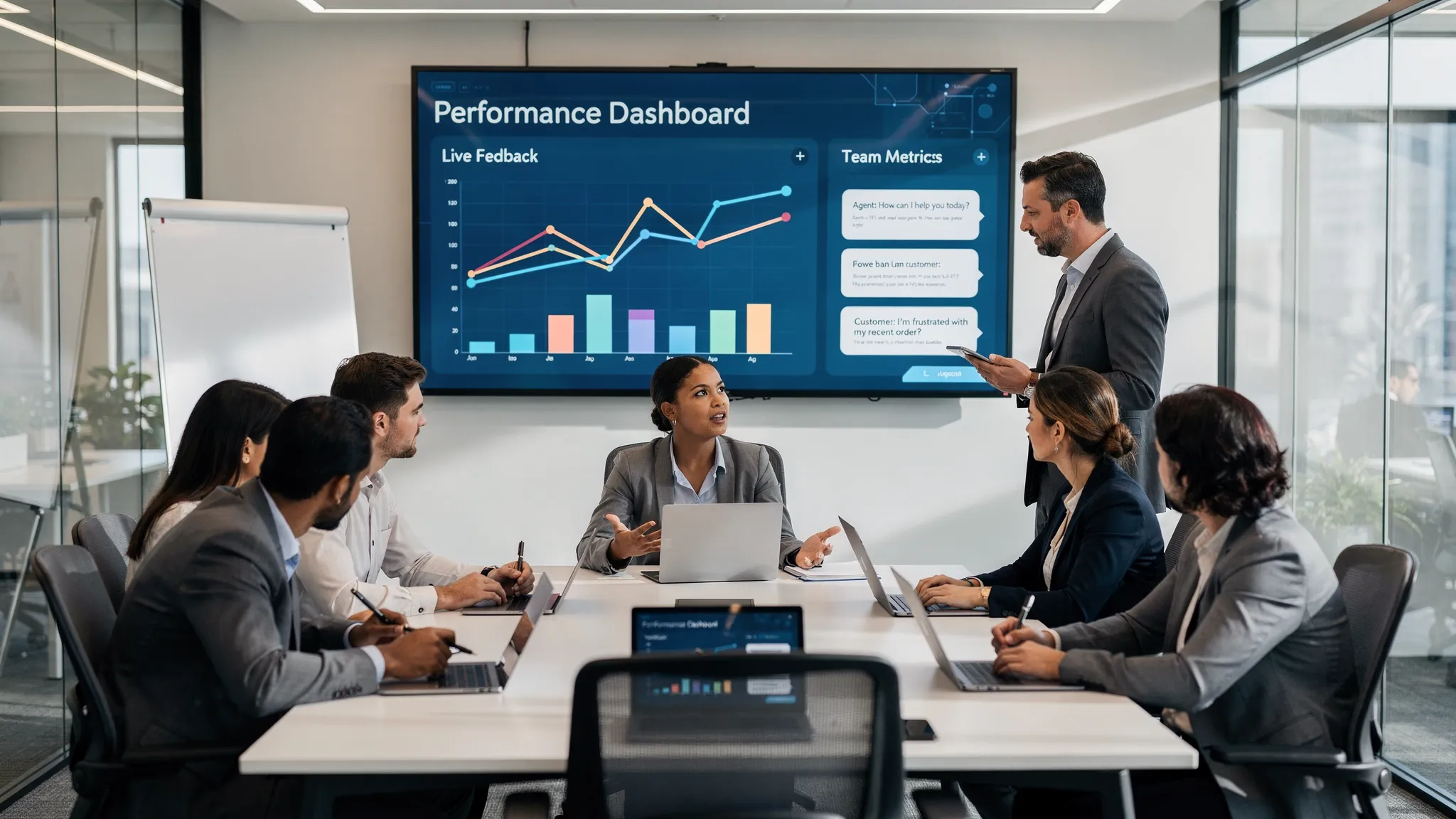
Practice is one of the biggest performance multipliers in sales, service, and customer-facing teams. Yet in many organizations, practice is either too generic, too infrequent, or too disconnected from the conversations employees actually have with customers.
A new hire may sit through product training, read a playbook, and shadow a few calls, then be expected to handle objections, calm frustrated customers, or explain value under pressure. Experienced employees are often not much better served. They might receive quarterly coaching, but little structured time to rehearse the moments that decide outcomes.
That is where AI simulations are changing the role of training. Instead of treating practice as a one-time workshop, teams can use AI-driven scenarios to rehearse realistic conversations, receive real-time feedback, and improve specific behaviors before they matter in front of a real customer.
Purposeful practice is not about doing more roleplay for the sake of it. It is about practicing the right skills, in the right context, with feedback that helps people improve fast.
Why traditional team practice often falls short
Most leaders agree that practice matters. The problem is not the idea. The problem is execution.
Traditional roleplay can be valuable, but it is often hard to scale. Managers may not have time to run consistent coaching sessions. Peers may go easy on one another. Scenarios may feel scripted or unrealistic. Feedback can vary widely depending on who is observing, and training data often disappears once the session ends.
This creates a gap between training activity and real performance. A team may complete a workshop, but leaders still cannot easily answer practical questions such as:
- Which objections are reps struggling with most?
- Which service agents need help with empathy, clarity, or de-escalation?
- Are employees improving over time or just completing modules?
- Which scenarios should be practiced next based on actual skill gaps?
- How confident is the team before launching a new product, message, or process?
Without clear answers, practice becomes a checkbox. Teams may train, but they do not always improve in a measurable or repeatable way.
AI simulations help solve this by turning practice into a continuous performance system. Employees interact with realistic customer or stakeholder scenarios, the platform evaluates their responses, and leaders gain visibility into progress across individuals and teams.
What purposeful practice looks like
Purposeful practice is structured, measurable, and relevant. It targets the specific moments where performance breaks down.
In sales, that might be handling a pricing objection, qualifying a complex opportunity, or explaining the business impact of a product. In customer service, it might be acknowledging frustration, asking clarifying questions, or resolving a complaint without escalating unnecessarily. In internal leadership training, it might be giving feedback, handling conflict, or communicating change.
The difference between generic practice and purposeful practice is focus. Employees are not simply told to improve communication. They are placed in a scenario where communication can be observed, scored, and improved.
A purposeful practice loop usually includes four elements:
| Element | What it means | Why it matters |
|---|---|---|
| Realistic context | The scenario mirrors a real conversation or decision point | Learners practice the moments they actually face |
| Clear skill target | The exercise focuses on a defined behavior, such as objection handling or empathy | Feedback becomes specific instead of vague |
| Immediate feedback | The learner receives guidance soon after responding | Improvement happens while the experience is fresh |
| Progress tracking | Performance is measured over time | Leaders can see whether practice is changing behavior |
This is where AI training platforms are especially useful. They can adapt scenarios to different roles, experience levels, and learning goals, then provide consistent feedback without requiring a manager to be present for every practice session.
How AI simulations make practice more realistic
The best training does not feel like a quiz. It feels like a conversation with stakes.
AI-powered roleplay simulations can recreate the uncertainty and variability of real customer interactions. A buyer might be skeptical, rushed, budget-constrained, or confused about value. A service customer might be upset because an issue has happened twice. A prospect might ask a question the rep did not expect.
This variability matters because real conversations rarely follow a perfect script. Employees need to practice listening, adapting, and responding in the moment.
Unlike static e-learning, AI simulations allow learners to engage actively. They can speak or type responses, try different approaches, and experience how the simulated customer reacts. Over time, this builds both skill and confidence.
For managers and enablement leaders, AI simulations also make practice more consistent. Instead of relying only on live call reviews or manager availability, teams can run the same core scenario across a group and compare improvement patterns. That makes coaching more objective and easier to scale.
The role of real-time feedback
Feedback is what turns repetition into learning.
If a rep practices ten objection-handling conversations but never understands what worked, practice will not produce much improvement. The same is true for customer service. An agent may think they showed empathy, but the response may have sounded defensive, vague, or rushed.
Real-time feedback helps close that gap. A platform can highlight strengths, point out missed opportunities, and suggest a better approach. The best feedback is not just corrective. It is actionable. It helps the learner know what to do differently next time.
For example, instead of saying a response was weak, feedback might show that the learner failed to acknowledge the customer concern before explaining the policy. Instead of saying a sales response was incomplete, feedback might suggest connecting the answer to the buyer's stated priority.
This kind of adaptive feedback and guidance makes training more personal. New hires can receive foundational coaching, while experienced team members can work on more advanced skills. Customizable skill levels are important because the same scenario should not feel identical for a beginner and a top performer.
Why analytics make team training more strategic
One of the most valuable parts of AI simulations is that they create data from practice.
In traditional training, leaders often measure attendance, completion, or satisfaction. Those metrics are useful, but they do not reveal whether employees are actually ready. AI simulation analytics can help leaders understand performance at a more practical level.
A team-focused learning platform can show trends such as which skills are improving, where learners are getting stuck, and how performance varies by group, role, or experience level. Progress tracking analytics and performance metric dashboards help managers coach based on evidence rather than intuition alone.
This matters for sales performance and customer service training because small behavior gaps can have large business consequences. If a team struggles to explain value, discounting may increase. If agents struggle to de-escalate, customer satisfaction may suffer. If managers cannot see these patterns early, they may only notice the problem after revenue, retention, or customer experience has already been affected.
Analytics also help L&D leaders prove training impact more clearly. Instead of reporting that a group completed a roleplay program, they can show how confidence, consistency, or skill scores changed across practice cycles.
AI simulations do not replace managers, they improve coaching
A common misconception is that AI training removes the human element from coaching. In practice, the opposite is often true.
Managers are most valuable when they focus on judgment, context, motivation, and personalized coaching. But they are often stretched too thin to observe every practice attempt or provide detailed feedback to every employee. AI simulations can handle the repetitive parts of practice, while giving managers better insight into where their attention is needed.
For example, a sales manager might review dashboard trends and see that several reps are struggling with competitive differentiation. Instead of running a generic team meeting, the manager can coach that specific skill. A service leader might notice that newer agents are resolving issues accurately but failing to use language that reassures the customer. That insight leads to targeted coaching rather than broad reminders.
AI becomes a practice partner, not a replacement for leadership. The manager still sets expectations, reinforces standards, and connects training to real business goals.
Where AI-driven scenarios create the most value
AI-driven scenarios are useful whenever performance depends on communication, decision-making, and confidence under pressure. They are especially effective in situations where employees need to practice before facing a real customer or stakeholder.
In sales, simulations can support discovery calls, objection handling, negotiation, product positioning, renewal conversations, and roleplay demos for new messaging. In service teams, they can help agents practice complaint resolution, empathy, policy explanation, and escalation prevention. In education and corporate learning, education simulations can help learners apply concepts in realistic environments rather than passively consume information.
The strongest use cases usually share three traits. The conversation matters to business outcomes. The skill can be improved through repetition. The organization needs consistency across a team.
That is why AI simulations are valuable for onboarding, product launches, manager training, compliance communication, and ongoing employee skill development. They give people a safe place to make mistakes, learn from feedback, and build fluency before real stakes are involved.
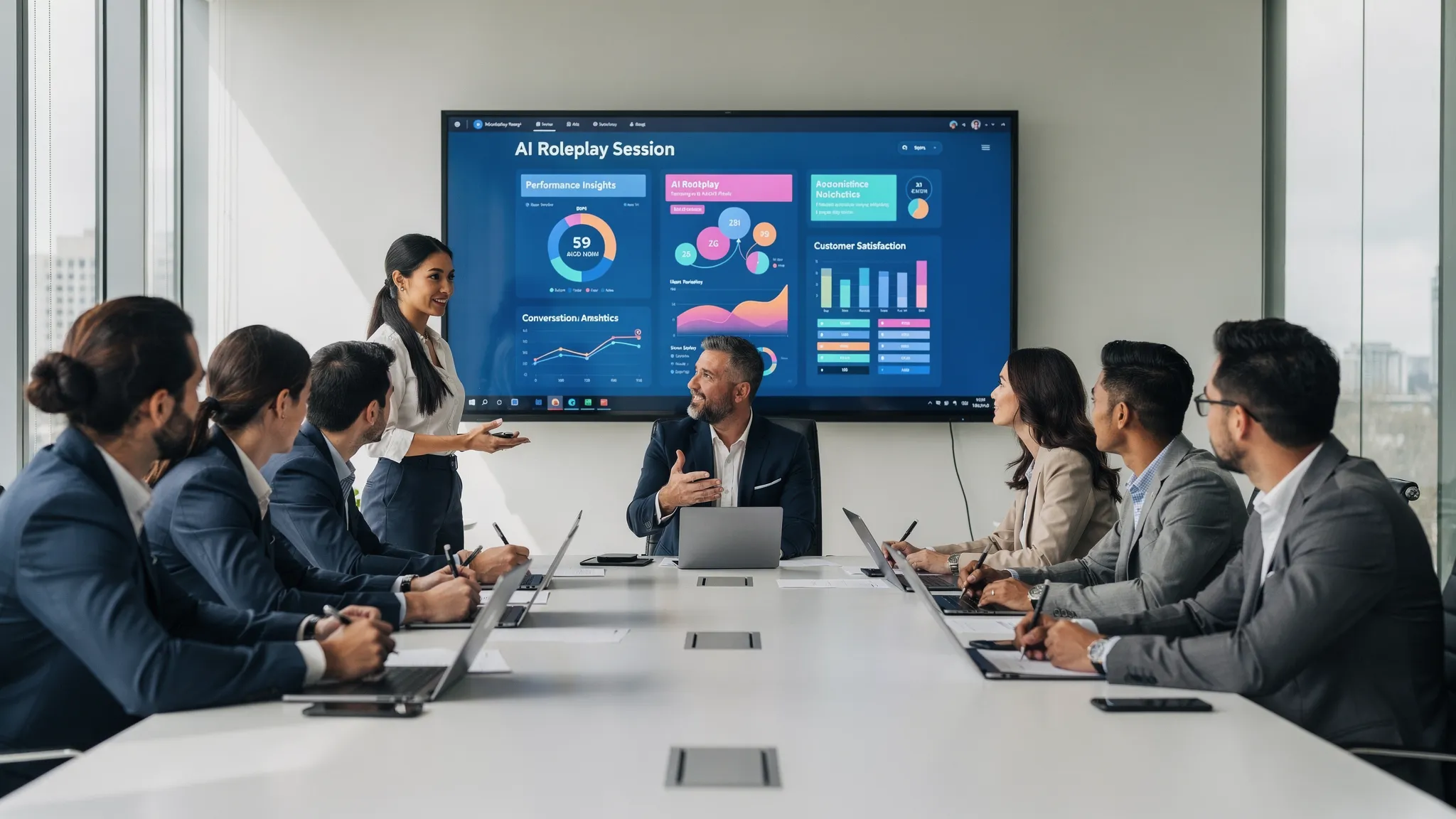
Designing scenarios that actually improve performance
The quality of the simulation depends heavily on the quality of the scenario design. A vague prompt creates vague learning. A realistic, targeted prompt creates useful practice.
Start with the business outcome. Do you want to improve close rates, reduce escalations, increase customer satisfaction, shorten ramp time, or prepare teams for a new offer? Once the outcome is clear, identify the behaviors that influence it.
For a sales team, a scenario might focus on uncovering business pain instead of jumping into a product pitch. For a customer service team, the scenario might focus on acknowledging emotion before moving to resolution. For a manager, it might focus on giving clear feedback without damaging trust.
Strong scenarios usually include:
- A specific role and situation
- A clear customer or stakeholder personality
- A defined challenge, objection, or emotional state
- A target skill to practice
- Criteria for what good performance looks like
The physical practice environment can also influence learning quality. Teams running live group roleplays or hybrid simulation sessions need spaces where participants can hear clearly and focus without distraction. For organizations improving boardrooms, offices, or training spaces, professional acoustic solutions can support clearer communication during practice and coaching sessions.
Once scenarios are live, they should not remain static forever. AI training works best when leaders review analytics, identify new skill gaps, and update practice paths accordingly. That keeps training aligned with the real conversations employees are having now.
A practical rollout plan for team training
Rolling out AI simulations does not require replacing your entire training strategy. The best approach is to start with a focused performance problem and expand from there.
Begin with one team, one use case, and one measurable outcome. For example, a sales enablement leader might start with pricing objection practice for mid-market reps. A service leader might start with de-escalation scenarios for new agents. A learning team might start with manager feedback conversations.
Then create a simple practice rhythm. Daily actionable tips can reinforce learning between formal sessions, while weekly or biweekly simulations give employees regular opportunities to apply skills. Managers can use progress tracking analytics to identify who needs support and which scenarios should be repeated.
A practical rollout might look like this:
| Phase | Focus | Success indicator |
|---|---|---|
| Pilot | Test one scenario with a small group | Learners complete practice and provide feedback |
| Calibrate | Align scoring and feedback with manager expectations | Leaders agree that feedback reflects real performance standards |
| Expand | Add more scenarios and skill levels | More employees practice regularly |
| Optimize | Use analytics to refine coaching and scenario design | Skill gaps become easier to identify and address |
Security and governance should be part of the process, especially for enterprise teams. When evaluating any AI training platform, leaders should understand how data is handled, who can access performance information, and how the vendor supports secure usage. Frameworks such as the NIST AI Risk Management Framework can help organizations think more clearly about trustworthy AI practices.
What to look for in an AI training platform
Not every AI simulation tool is designed for team performance. Some tools focus on content generation. Others focus on one-off practice. For sales, service, and corporate training, leaders should look for capabilities that support both individual learning and organizational visibility.
Key capabilities include AI-powered roleplay simulations, personalized training scenarios, real-time feedback, adaptive guidance, customizable skill levels, and analytics that show progress over time. Team-focused learning matters because managers need to coach groups, not just individual learners. Enterprise-grade security also matters when practice data includes employee performance information or customer-like scenarios.
Scenario IQ is built around this type of purposeful practice. The platform provides AI-driven, personalized scenario-based training with real-time feedback, progress tracking analytics, team learning workflows, adaptive guidance, daily actionable tips, and performance metric dashboards. For organizations that want to improve communication, confidence, and readiness across sales and service teams, that combination helps connect practice to measurable improvement.
Frequently Asked Questions
What are AI simulations in team training? AI simulations are interactive practice environments where employees respond to realistic scenarios, such as sales calls, service complaints, or coaching conversations. The AI adapts the interaction and can provide feedback on the learner's performance.
How are AI simulations different from traditional roleplay? Traditional roleplay depends heavily on manager availability, peer participation, and manual feedback. AI simulations make practice more scalable and consistent by allowing employees to rehearse realistic conversations and receive feedback without waiting for a live coaching session.
Can AI simulations improve sales performance? They can support sales performance by helping reps practice discovery, objection handling, value communication, and negotiation in a safe environment. The impact depends on scenario quality, feedback quality, manager reinforcement, and how closely training aligns with real sales conversations.
Are AI simulations useful for customer service training? Yes. Customer service teams can use AI simulations to practice empathy, de-escalation, policy explanations, issue resolution, and difficult customer conversations. These are skills that benefit from repetition and immediate feedback.
What should leaders measure when using AI simulations? Leaders should track completion, skill improvement, scenario performance, confidence trends, recurring gaps, and coaching follow-up. The goal is not only to see whether employees practiced, but whether practice is improving readiness and behavior.
Help your team practice with purpose
Teams do not become confident because they watched a training video once. They become confident because they practice the moments that matter, receive clear feedback, and improve over time.
AI simulations make that possible at scale. With Scenario IQ, organizations can create personalized roleplay training, deliver real-time feedback, track progress, and help employees build the communication skills that drive better sales and service outcomes.
If your team needs more realistic practice, stronger coaching visibility, and a repeatable way to build confidence, explore Scenario IQ and see how AI-powered training can help your people perform when it counts.